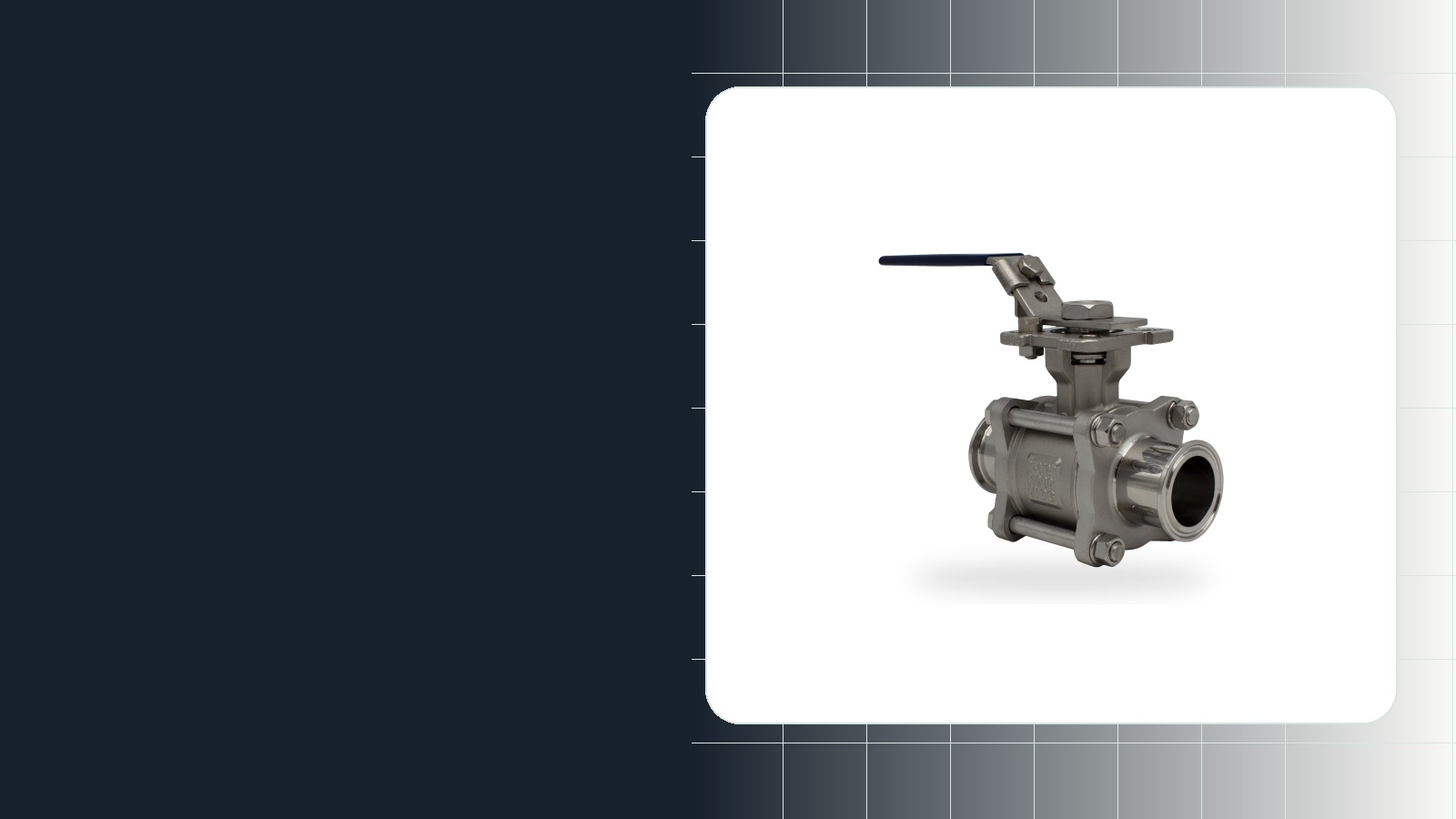

Cavity-Filled Ball Valves: What They Are and When to Specify Them
Where full-port sanitary flow meets the need to reduce product hold-up behind the ball.
Viscous products, suspended solids, and changeover-sensitive processes.
Reduced cavity space around the ball compared with a standard seat concept.
Drainability, seat material, CIP method, and high-purity requirements.
A cavity-filled ball valve solves a specific sanitary valve problem: the space around the ball where product can collect, dry, crystallize, or create changeover risk.
Ball valves remain useful because they are simple, full-port, and practical for viscous products or products with suspended solids. But in sanitary service, the question is rarely just “will it open and close?” It is “what happens to the product behind the ball?”
Cavity-filled seats reduce the open pocket around the ball so product has fewer places to hide between operation and cleaning.
Full-port flow, fewer places for product to hide
The right sanitary ball valve can keep pressure drop low while reducing product hold-up around the ball. Seat material, product chemistry, cleaning method, and automation requirements still need review.

Where cavity-filled seats earn attention
Viscous products
Chocolate, syrups, sauces, concentrates, and similar fluids benefit from full-port flow.
Product changeovers
Color, flavor, allergen, or formulation changes make retained product a real concern.
Crystallizing products
Products that dry or harden can create cleaning and valve maintenance headaches.
Suspended solids
Ball valves can pass certain particulates better than more restrictive valve styles.
What processors are balancing
| Need | Why a ball valve helps | Why cavity-filled seats matter |
|---|---|---|
| Low pressure drop | Full-port flow keeps restriction low. | Seat design reduces retention without giving up the flow path. |
| Simple operation | Quarter-turn actuation is straightforward. | Still supports manual or automated operation. |
| Cleanability | Depends on product, seat, and cleaning method. | Reduces the pocket where product can sit behind the ball. |
| Changeover control | Useful in high-mix operations. | Helps reduce old-product hold-up during batch transitions. |
Reviewing a sanitary ball valve application?
Triplex can help confirm whether a cavity-filled ball valve fits the product, cleaning method, automation plan, and changeover risk — or whether another sanitary valve style would be cleaner.
- Product, viscosity, temperature, and solids
- Manual vs. automated operation
- CIP method and changeover requirements
- Seat material and chemical compatibility

