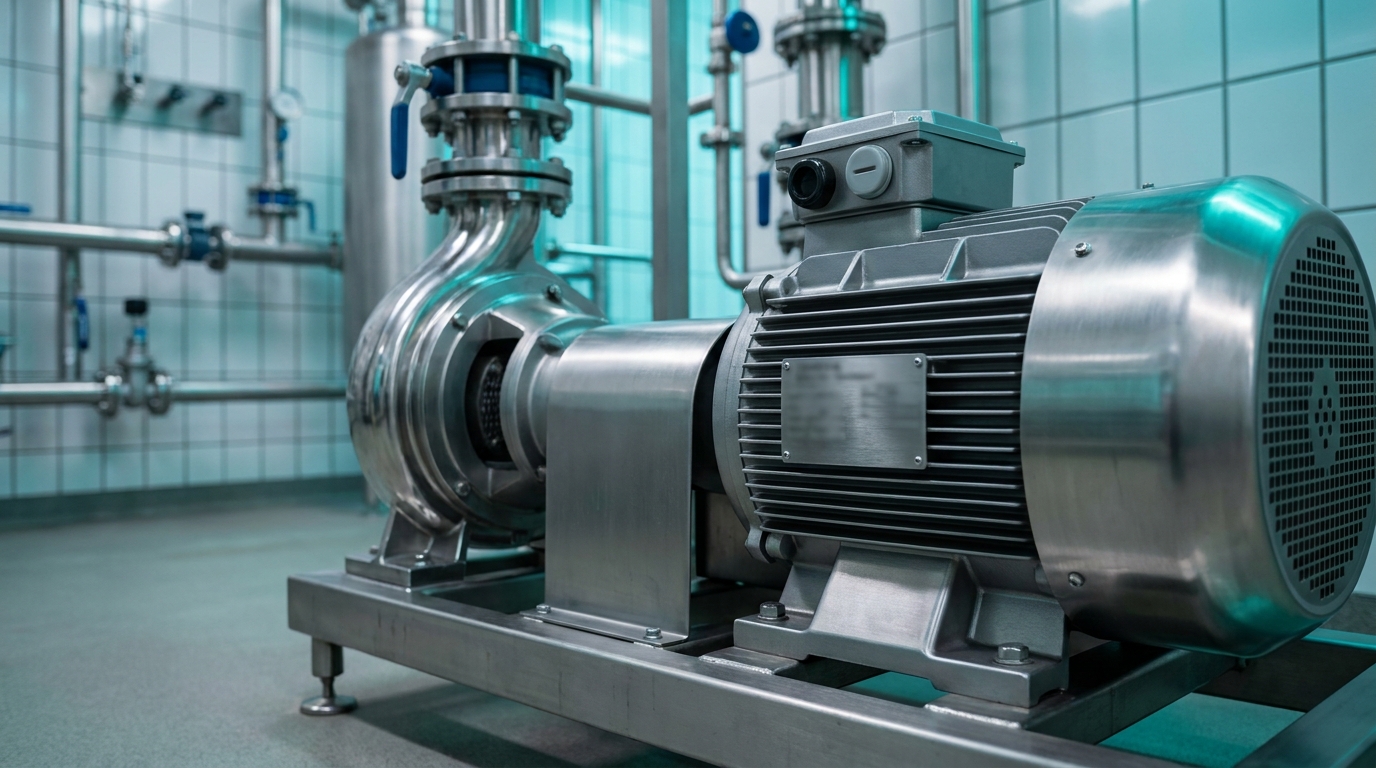

Motor Nameplate Basics: What to Capture Before Replacing a Pump Motor
The details that protect fit, electrical compatibility, speed, and process performance.
A clear nameplate photo plus the full pump/motor assembly.
RPM and frame size — both can quietly break a replacement.
VFD duty, washdown enclosure, and process changes since the last install.
A motor nameplate is small, easy to ignore, and absolutely capable of derailing a pump replacement if the wrong details are missed.
For a sanitary pump, the motor is not just a commodity component. It affects horsepower, speed, mounting fit, wiring, enclosure suitability, controls, and how the pump behaves once it is back in service.
Send a clear nameplate photo plus a full pump-and-motor assembly photo. The nameplate answers the electrical question. The assembly photo helps answer the mechanical-fit question.

The fields that prevent expensive guessing
| Nameplate field | What it tells us | What can go wrong |
|---|---|---|
| Horsepower | Available mechanical output. | Underpowered motor trips or overheats under real process load. |
| Voltage / phase | Electrical compatibility with the plant. | Wrong wiring, starter, or site-power assumptions. |
| RPM | Approximate loaded speed. | Flow rate, shear, and horsepower draw change unintentionally. |
| Frame size | Mounting pattern and shaft height. | Motor does not fit the base or coupling alignment. |
| Enclosure | Environmental protection. | Dry-duty motor gets put into washdown service. |
How to approach a replacement
Capture the nameplate clearly
Take a straight-on photo. If glare or wear makes it hard to read, take several.
Capture the full assembly
Baseplate, coupling, gearbox, guard, and orientation all matter.
Confirm the duty
Product viscosity, flow, pressure, temperature, and VFD use determine whether like-for-like is actually right.
Replacing a pump motor?
Send the nameplate photo, full pump/motor assembly photo, site voltage, control method, and any recent process changes. That gives Triplex enough context to avoid a bad fit-up or wrong-speed replacement.
- Motor nameplate photo
- Full pump and baseplate photo
- Pump model and serial number
- Starter/VFD and washdown environment

